October 07 (Tue)
Dive #67: The Case of the Okinawan Bisezaki Tourist Snorkeler Tragedy
I saw a post on SNS regarding the fatal accident involving the following snorkeler tourist, which prompted me to investigate. I developed doubts about the deceased's cause of death and the topography of Bisezaki, and further investigation led me to form two hypotheses. The following is a discussion based on inferences drawn from news reports by one diver concerning these hypotheses. Please do not take this as an absolute truth, as it is not an expert's deliberation.
The two points that caught my attention are listed below. These two points simultaneously form the hypotheses discussed in this article.
- Considering the progression of events, was the husband's direct cause of death Immersion Pulmonary Edema (IPE) rather than typical drowning?
- Is Bisezaki fundamentally a dangerous area for swimming?
Below, I will proceed with my inference regarding these two points.
- Was the husband's direct cause of death Immersion Pulmonary Edema (IPE)?
-
- What is Immersion Pulmonary Edema (IPE)
-
Immersion Pulmonary Edema is an acute illness that occurs on or in the water, which has become known relatively recently, only in the last 20 years or so. It has been reported to occur in diving, open water swimming, and recently, even in swimming pools.
Although the onset age is often middle-aged and older adults, the participants in the activities mentioned above are predominantly middle-aged and older, and evidence of a relationship with age is still insufficient. For now, it seems best to assume that anyone engaging in water-based activities is not immune, regardless of age.
Before explaining what happens inside the body, I will describe the mechanism of human respiration.
The human lung contains an organization called alveoli, which are very important for taking oxygen into the body. Gas exchange occurs between these alveoli and the surrounding capillaries, and by taking oxygen into the bloodstream, a person maintains life. Of course, the excretion of carbon dioxide from the body and the excretion of excess nitrogen, which is deeply related to divers, also occur through these alveoli.
In Immersion Pulmonary Edema, plasma (the water component of blood) leaks from the capillaries into the alveoli, obstructing oxygen exchange, leading to hypoxic encephalopathy, and in the worst case, death.
The reason why this occurs is understood to some extent.
The lower water temperature and water pressure compared to air cause peripheral blood vessels in the limbs and feet to constrict, pushing blood back to the lungs. This increases the internal pressure within the capillaries surrounding the alveoli, and as the alveolar side becomes negatively pressured, plasma from the blood leaks into the alveoli, a phenomenon that occurs.
If left untreated, the alveoli will eventually be filled with plasma, and like a drowned lung, the inside will be filled with liquid, making gas exchange impossible, ultimately leading to hypoxic encephalopathy, which is the pathology of Immersion Pulmonary Edema.
There are differences in how symptoms manifest in Immersion Pulmonary Edema compared to typical drowning.
In typical drowning, the alveoli are filled with seawater or water in a short time, leading to hypoxic encephalopathy in a short time, which tends to cause rapid loss of consciousness and cardiopulmonary arrest.
In contrast, in Immersion Pulmonary Edema, due to the mechanism of plasma leaking into the alveoli, there is a slight time lag before transitioning to hypoxic encephalopathy, loss of consciousness, and cardiopulmonary arrest.
To put it more simply, typical drowning often results in cardiopulmonary arrest at the time of discovery, while Immersion Pulmonary Edema is characterized by loss of consciousness with respiratory failure and cardiopulmonary arrest often occurring after being rescued and brought ashore.
In fatal cases occurring during scuba diving, it is often seen that the diver surfaces normally, establishes buoyancy, and is breathing, but then loses consciousness while floating on the surface, leading directly to cardiopulmonary arrest.
Since I have mentioned the scary phrase "cardiopulmonary arrest," I will add this for clarification. Immersion Pulmonary Edema does not happen to everyone. However, risk factors are becoming known recently. In the next section, I will organize the risk factors for Immersion Pulmonary Edema.
- Risk Factors for Immersion Pulmonary Edema (IPE)
-
Immersion Pulmonary Edema does not affect everyone, and frequent occurrences are not observed.
However, some reports indicate that a non-negligible number of diving fatalities currently are due to medical conditions, and a significant portion of those are Immersion Pulmonary Edema. Therefore, knowing the risk factors for Immersion Pulmonary Edema is very important.
The risk factors for Immersion Pulmonary Edema are now known to some extent.
As this article is a discussion about the Bisezaki snorkeling accident, I will limit my discussion of Immersion Pulmonary Edema risk factors to snorkeling. I will cover other water sports activities like scuba diving in a later article.
- Fundamental Factors
-
Having the body immersed in water and the act of swimming are the fundamental factors. Immersion Pulmonary Edema is more likely to occur when the water temperature is low or the swimming intensity is high.
- Snorkel Breathing Resistance
-
As anyone who breathes through a snorkel knows, and any diver is aware, a snorkel has breathing resistance (even a regulator has resistance, though it might be less noticeable). Compared to the normal state without any gear, gas exchange efficiency is lower, so divers are always taught to take deep, large breaths in the Open Water introductory course.
This snorkel breathing resistance is a hypothesized risk factor for Immersion Pulmonary Edema, and this idea is supported with persuasiveness. It is said that the issue lies with inhalation, not exhalation.
What this means is that during human inhalation, muscles physically expand the lungs. This creates negative pressure within the lungs, and air passes through the airways and flows into the alveoli.
Some researchers worry that the resistance of snorkel inhalation increases the magnitude and duration of this negative pressure, making it easier for plasma to leak into the alveoli, thereby exacerbating Immersion Pulmonary Edema.
There are also researchers who argue that snorkel inhalation resistance is not great enough to contribute significantly to the deterioration of the disease state, so the evidence is not yet definitively established.
However, since it is theoretically conceivable as a risk factor, it remains to be seen how the evidence evolves.
- Excessive Exercise
-
It is known that swimming strenuously beyond one's ability or fighting against a current increases the heart rate and the internal pressure of the capillaries surrounding the alveoli, raising the risk of Immersion Pulmonary Edema. Recall that low temperature and high exercise load are the fundamental factors for Immersion Pulmonary Edema.
- Underlying Conditions
-
It is known that individuals with high blood pressure or pre-existing heart conditions have a higher risk of developing IPE, even with light exercise, because being buoyant in water places a considerable strain on the body. Furthermore, some research suggests that not only hypertension and heart disease but also blood pressure medication, cold stimuli, dehydration, and stress can increase the risk of onset. For similar reasons, as an amateur, I wonder if hyperlipidemia and diabetes are also risk factors for onset, but the evidence is currently uncertain.
- Why I Suspect Immersion Pulmonary Edema (IPE)
-
Following the progression of the accident involving the deceased husband at Bisezaki, it strongly suggests Immersion Pulmonary Edema (IPE) rather than typical drowning.
Although the deceased husband's underlying medical conditions are unknown, he meets all the other risk factors for Immersion Pulmonary Edema: age, the low-temperature environment of the sea which differs from land, the extremely strenuous rescue of his wife which would be tough even for a diving instructor, and the negative pressure promotion in the alveoli due to the snorkel's respiratory load. The combination of adverse conditions makes it almost abnormal for Immersion Pulmonary Edema *not* to occur.
According to the news report, the sequence of the deceased's accident was as follows:
The fatality first swam across the channel between the Bisezaki island and the Bisezaki coast to reach Bisezaki. After arriving, he noticed his wife was being swept away and went to rescue her.
Since the report states he lost consciousness after climbing onto the reef, it is inferred that the couple was swept close to the outer reef or even beyond it. And this happened with virtually no buoyancy aids.
This description alone makes me, a diver, shiver in fear. However, the report indicates that the deceased husband managed to make it back alive with his wife to the reef.
The report only mentions "climbing onto the reef," so it is unclear if they got onto a reef that was exposed above the water near the outer reef, landed on Bisezaki itself, or managed to land on Bisezaki Coast.
Since the first report was made by a third party, I speculate that they likely reached Bisezaki Coast.
In any case, the husband lost consciousness after returning to the shore and resting, and subsequently went into cardiopulmonary arrest. This is uncommon in typical drowning.
In typical drowning, the husband would likely have gone into cardiopulmonary arrest within 2 minutes of drowning and been found deceased underwater. However, the husband went into cardiopulmonary arrest *after* reaching the shore. This is rarely seen in typical drowning and provides a basis to suspect Immersion Pulmonary Edema (IPE).
However, the report also mentioned that water had collected in the mask. Identifying whether this water was just seawater or mixed with plasma components is very important for determining the cause of the husband's death.
However, bystander CPR was certainly performed on the husband who was in cardiopulmonary arrest, and if so, the mask would have been removed from his face. Since the water in the mask would have flowed out, there is no way to analyze its components.
Therefore, the true cause of the husband's death will remain unknown until the autopsy findings—the analysis of the fluid filling his lungs—are revealed.
It is generally common for accident victims' autopsy findings not to be disclosed to protect privacy. Therefore, no matter how rationally we try to grasp the accident, we cannot go beyond speculation.
The same goes for my lengthy article. No matter how hard I try to add rational consideration, I cannot go beyond the realm of speculation.
- What Can Be Done Now to Prevent Immersion Pulmonary Edema (IPE)
-
If the deceased husband's condition was Immersion Pulmonary Edema, it is a matter that concerns many of us. Everyone gets older, and physical strength declines. But the act of swimming in the sea will generally continue.
There is no need to agree with the extreme view often seen online that entering the sea itself is wrong. We humans are creatures whose nature is to get out of bed, leave the room, and be active outside the house. The argument to stay confined to a room completely denies the nature of the human species.
There is no need to listen to such unnatural and unrealistic arguments for humans. We are human. What is more important is the realistic perspective of how to reduce the risk of outdoor accidents as intelligent Homo sapiens.
Therefore, here I will summarize how to reduce the risk of Immersion Pulmonary Edema based on currently available knowledge.
It has only been 20 years since the condition of Immersion Pulmonary Edema became known. The evidence may not be sufficient, and solid evidence is expected to be established from now on.
This means we need to continuously track information regarding Immersion Pulmonary Edema.
Please continue to track this information yourself, who is reading this article. I am already over 60. When new findings are obtained, I may no longer be in this world.
Therefore, you must track the information yourself and update your knowledge with the latest findings. I will also continue as long as I am alive.
- Low Water Temperature
-
There are two ways to avoid low water temperature.
The first is to avoid low water temperature itself. This could be a decisive way to prevent Immersion Pulmonary Edema, but it implies the worst-case scenario of not entering the water, which is unrealistic.
However, in places like shallow beaches in Minamiki Kushimoto during the summer, the surface water temperature can reach 30°C. In such cases where the water temperature is more than sufficient, a swimsuit or rash guard might suffice (of course, wearing a life jacket is a prerequisite. If you are a diver, you should know what gear to wear. Choose a suit according to your common sense as a diver). However, this also depends on the weather conditions and sea conditions at that time.
The other way to mitigate low water temperature is to wear insulating gear, such as a well-fitting wetsuit, which I recommend.
Protective suits like wetsuits provide immense benefits in terms of securing buoyancy, preventing injuries, and most importantly, maintaining body temperature, which is the issue we are addressing here.
I strongly recommend that snorkelers wear a combination of a wetsuit and a life jacket.
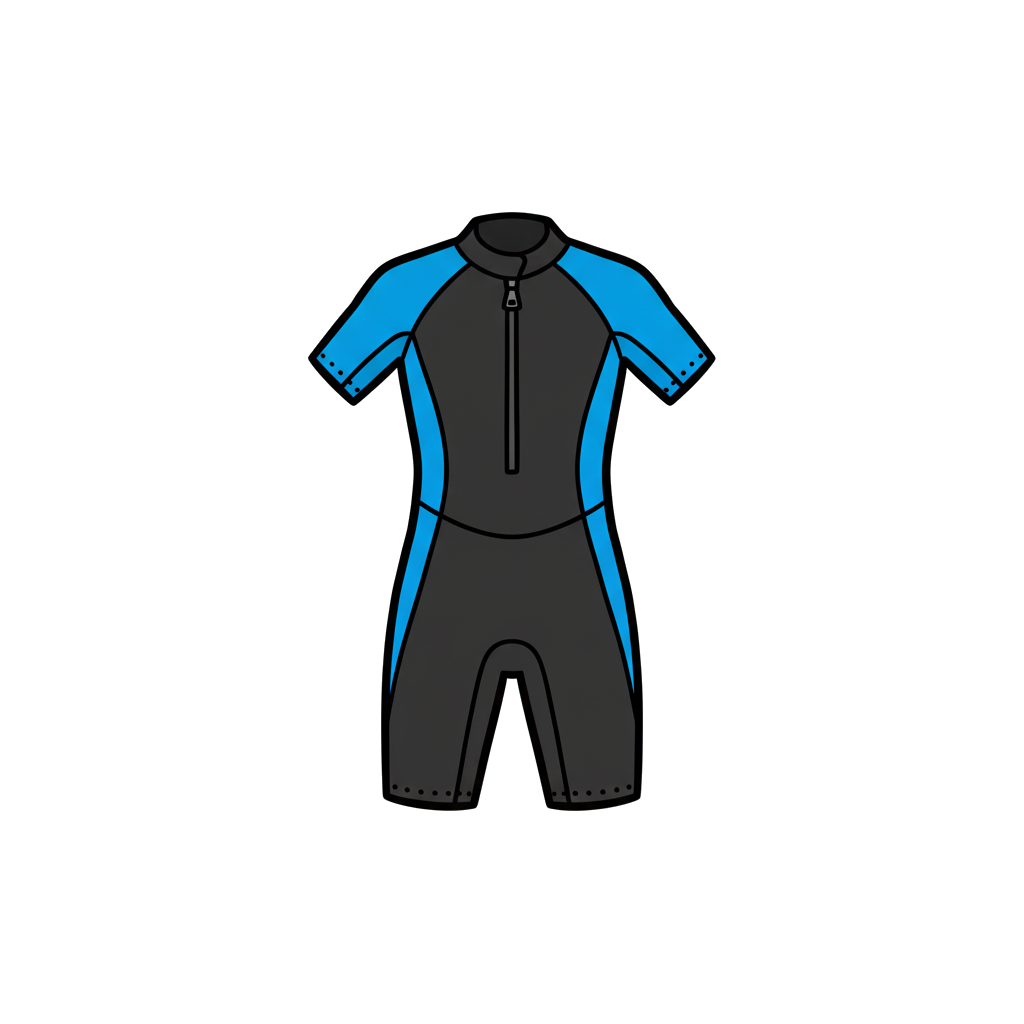
Image generated by gemini 2.5 flash If high water temperatures are expected, you might not need a full one-piece or two-piece wetsuit. A "spring" type, which looks like a half-sleeve and half-pants suit combined, might be sufficient.
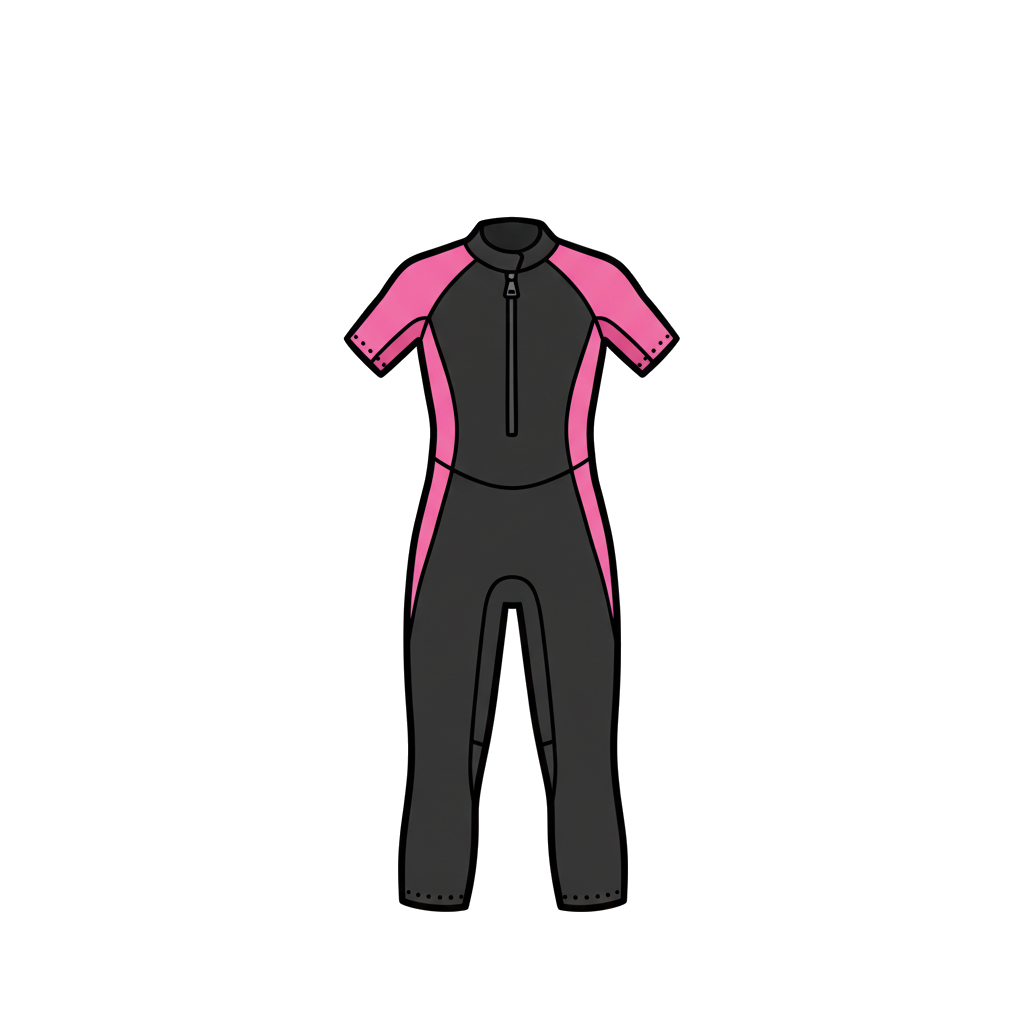
Image generated by gemini 2.5 flash If you anticipate kneeling on rocks, choosing a "seagull" type wetsuit, which is short-sleeved and ankle-length, is also a good option.
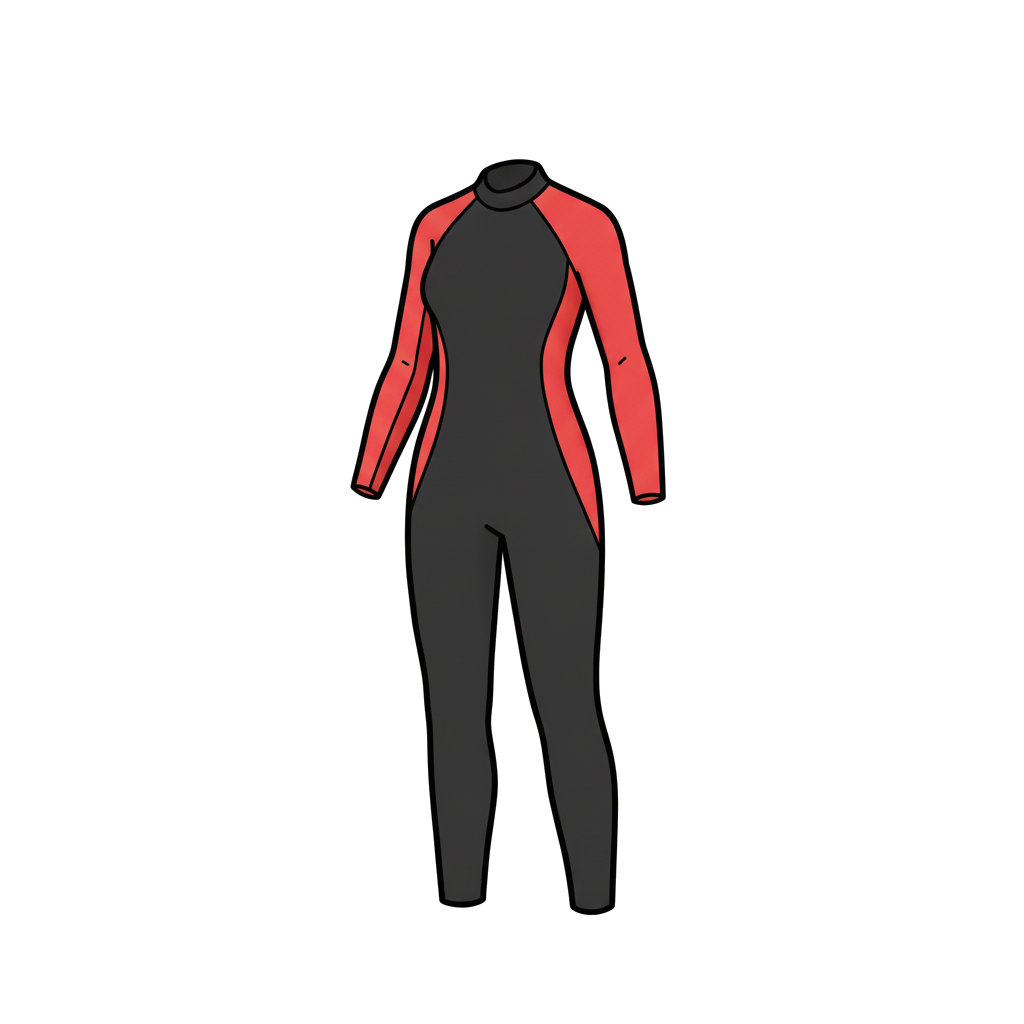
Image generated by gemini 2.5 flash For injury prevention, I would recommend a one-piece suit that covers up to the wrists and ankles. However, in the strong sunlight and high surface water temperature of midsummer, it can be hot, and you might have to worry about heatstroke instead.
When making or purchasing a suit, you must thoroughly understand the anticipated water temperature and make an appropriate choice.
Furthermore, regardless of the type of suit chosen, a good fit is crucial.
If the suit is too large, more water will enter and exit the suit, making it difficult to maintain body temperature. This is clearly unfavorable from the perspective of preventing Immersion Pulmonary Edema.
Conversely, if the suit is too tight and causes discomfort, it is also undesirable from the viewpoint of Immersion Pulmonary Edema prevention. One piece of evidence suggests that excessive compression of the body can increase the blood pressure in the capillaries surrounding the alveoli, potentially promoting the infiltration of plasma into the alveoli.
Therefore, wearing a properly fitting suit is very important in preventing Immersion Pulmonary Edema. For middle-aged and older individuals in the high-risk generation, I recommend getting properly measured at a physical store and ordering a custom-made suit.
If custom-made is not possible, please be persistent in trying on suits at a physical store to find one that is neither too large nor too small.
Please seriously consider whether randomly choosing a size like L or XL from an online store is truly effective in preventing Immersion Pulmonary Edema and if it is safe.
I know that most people think, "It won't happen to me," or "This much is fine." Even veteran scuba diving instructors say this.
However, during my time as a scuba diving assistant instructor and divemaster candidate, I saw countless sad accidents and dangerous close calls resulting from the "this much is fine" mindset.
Therefore, you must doubt yourself at least once if you think "this much is fine." You are that vulnerable. Even scuba diving instructors are human and thus vulnerable.
- Excessive Exercise
-
I have repeatedly mentioned that low temperature and excessive exercise are the main causes of Immersion Pulmonary Edema. In the Bisezaki accident, although there was the unavoidable circumstance of rescuing his wife, the husband, who is presumed to have no rescue training, ultimately succumbed and lost his precious life.
To state the conclusion first: once you reach middle age and beyond, you should avoid vigorous swimming. Furthermore, you should never enter areas with currents without any preparation. Entering such a place without buoyancy aids like a wetsuit or life jacket, and without any knowledge, skills, or judgment to deal with currents, is a suicidal act.
Before entering the water, carefully observe the topography, predict where the current is likely to flow and how strong it might be based on the topography, understand the tide situation and how strong the current is likely to be at that time, how it will change over time, and if the location is a reef cut, determine if the seawater that entered the reef is concentrated in the channel in front of you. If there is even a slight current, calmly assess whether you have the physical strength to swim against it, and whether it is safe for someone your age to enter.
If you don't, you will, in the worst case, die there. You might be swept into the open sea, caught by the current, and never be found. Even if you aren't swept into the open sea, you might panic from being unable to return to shore and drown. There are cases of drowning while wearing fins and being unable to stand up. There are also cases of developing Immersion Pulmonary Edema and dying after strenuously fighting the current to reach the shore. The accident cases of tourist snorkelers dying, such as being unable to perform a snorkel clear—a simple skill for divers—are too numerous to list.
Acquire the knowledge, skills, and judgment to avoid dying in the sea. The affordable and quick way to do this is to join a school. Not a tour. A school. Join the snorkeling school of a shop that also offers diving courses. That will significantly reduce the risk of an accident.
A list of skills required for snorkelers and skin divers is summarized in Appendix A. Please refer to it.
- How to Use a Snorkel
-
As divers know, a snorkel involves a non-negligible increase in dead space. Therefore, from the Open Water course, we learn that when breathing with a snorkel, one must take deep, large, and slow breaths, consciously focusing on gas exchange in the lungs.
Dead space refers to the volume of air that is not used for actual gas exchange. In the body, this includes the windpipe and bronchi from the mouth to just before the alveoli. Wearing a snorkel means this dead space increases by the internal volume of the snorkel.
Furthermore, a snorkel has breathing resistance. Air is physically a fluid, so resistance is created when it flows somewhere, especially through a narrow space. This physical phenomenon also inhibits gas exchange, which again leads to the instruction to take deep, large, and slow breaths when breathing with a snorkel.
As mentioned before, during inhalation while wearing a snorkel, the pressure inside the alveoli tends to become negative, and the relative pressure in the capillaries surrounding the alveoli increases, making it easier for plasma (the water component of blood) to leak out. Some researchers suggest that improper snorkel breathing may exacerbate Immersion Pulmonary Edema.
For this reason, we must take deep, large, and slow breaths when breathing with a snorkel.
However, if vigorous swimming or other activities make it impossible to take deep, large, and slow breaths, the negative pressure state in the alveoli and the relative increase in capillary pressure around the alveoli are promoted, leading to a state susceptible to Immersion Pulmonary Edema. Therefore, people with risk factors must avoid vigorous swimming.
In the Bisezaki accident, the husband could not possibly have refrained from going to the rescue. So, what should the couple have done? They should have accurately judged the sea conditions, realized they did not have the ability to swim through the current, and made the decision not to enter a place with a current. The couple should not have entered that sea at that time.
It is extremely dangerous, as in this case, for people without knowledge, skills, or even the mental preparedness and judgment, to carelessly rush into open water (the sea in its natural state) like Bisezaki Coast, which is neither a designated swimming beach nor an official swimming area.
I repeat, there are many diving shops in the world that are perfectly suited for acquiring these things. And many of those diving shops offer courses and training for safely enjoying snorkeling. Please consider participating. You can undoubtedly reduce the risk of dying in the sea.
- Underlying Conditions
-
I mentioned that high blood pressure, heart disease, obesity, use of blood pressure medication, cold stimuli, dehydration, and stress are risk factors for Immersion Pulmonary Edema. As you can see, all but a few are lifestyle diseases. Therefore, you need to commit to a lifestyle free of adult diseases by moderating alcohol (lifelong abstinence is desirable), getting moderate exercise, maintaining a healthy diet, and getting enough sleep.
I can almost hear someone saying, "It's too late for that." If you are one of those people, start treatment now and earnestly work on improving your lifestyle habits. If you want to enjoy the sea, commit to it.
Also, avoid excessive stress and actively manage stress regularly. For cold stimuli, please refer to the section on Low Water Temperature.
Regarding hydration, dehydration is considered a risk for Immersion Pulmonary Edema, but excessive water intake is also said to be a risk factor. This is explained by the idea that excessive water intake leads to water being absorbed into the bloodstream, which easily raises the pressure in the capillaries surrounding the alveoli, increasing the risk of Immersion Pulmonary Edema.
This means that neither too much nor too little hydration is good. Snorkeling involves mouth breathing throughout the activity, which causes throat dryness. There are cases of Immersion Pulmonary Edema developing after people excessively hydrate before starting snorkeling due to this. Moderate your water intake. Ultimately, excess is not good.
- Is Bisezaki a dangerous place unsuitable for swimming?
-
I have been arguing that the direct cause of the deceased husband's death may have been Immersion Pulmonary Edema (IPE). In this discussion, the news report mentioning that he died *after rescuing his wife who had been swept away* implies that the sea at the accident site *had a current*.
My argument was that the husband may have developed Immersion Pulmonary Edema (IPE) due to the low-temperature environment underwater and the strenuous exercise of the rescue in a current, unfortunately leading to his death.
Of course, this will remain in the realm of speculation forever unless the autopsy findings are disclosed, but it is not unreasonable to think so given the circumstances.
Furthermore, while gathering information, I found numerous reports that people are frequently swept away by tidal currents and drown at Bisezaki. Each time I see such information, the question of whether Bisezaki is truly a suitable place for general swimmers to swim stubbornly remains.
From this point onward, rather than an academic discussion, I will consider what kind of place Bisezaki is for swimmers by referencing materials from the Japan Coast Guard, news reports, blogs, travelogues, topographical maps, aerial photographs, and other information, and consider whether Bisezaki, which is often referred to as a hidden gem for sea activities and snorkeling, is truly safe for swimmers.
The following discussion will also be based on inferences from the materials mentioned above. Since an on-site investigation is not feasible, I do not deny the possibility that facts may be stated incorrectly during the process of inference. If my inferences are rejected due to geographical facts or the marine environment, I would appreciate your correction.
- Characteristics of Bisezaki's Topography and Analogy of Danger Based on Topography
-
The area around Bisezaki is not a managed swimming beach. Therefore, if we want to enjoy snorkeling or swimming at Bisezaki, it is very important to know what the topography of Bisezaki is like.
So, first, let's open Bisezaki on Google Maps.
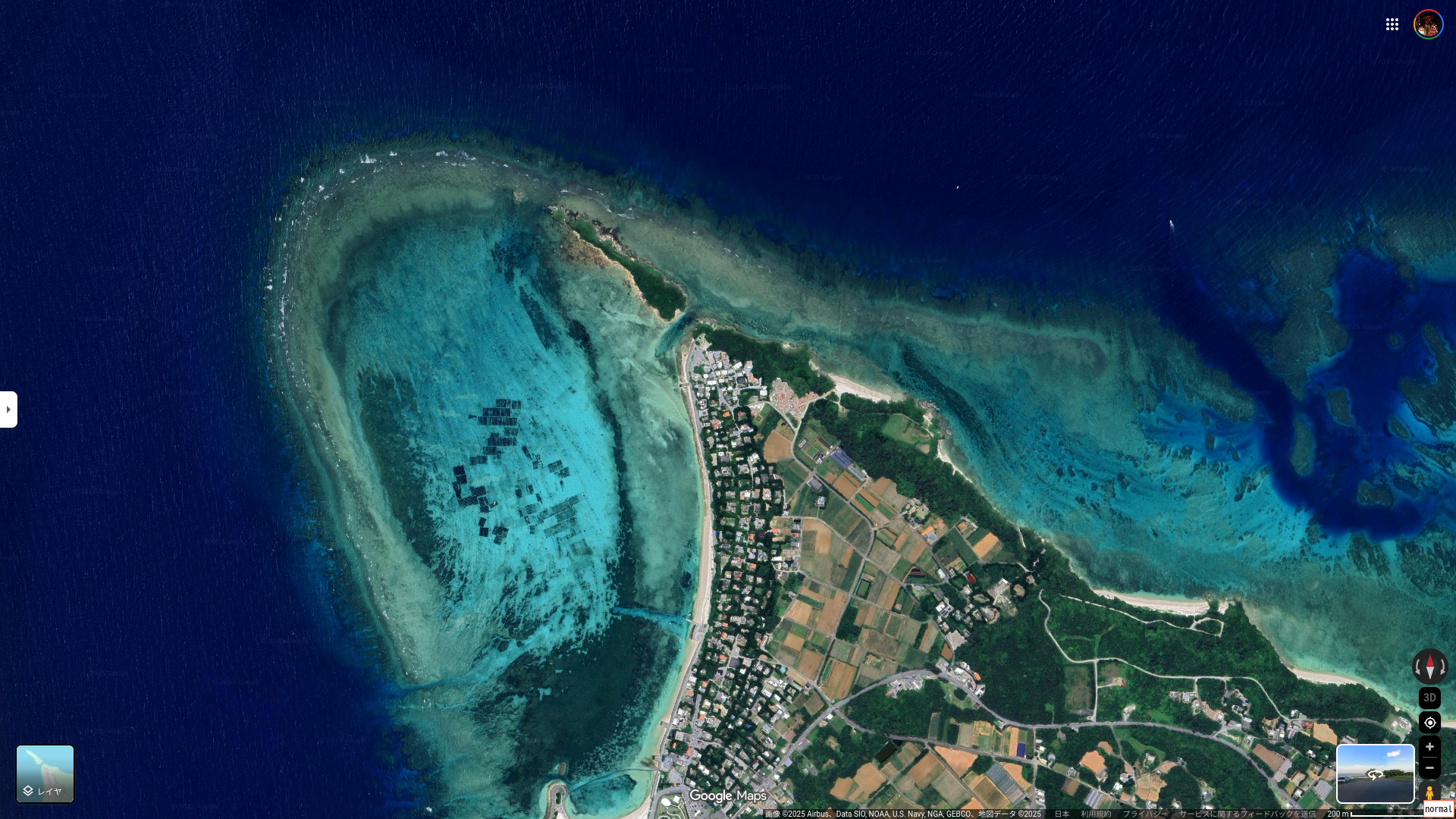
From Google Map. Click or tap to view in a new tab If you have completed the OW course and remember what you learned in the classroom, you might instinctively say, "Ah, it looks like there's a current." That's right; this topography could only be formed by the scouring action of water flow. Therefore, it is natural to think that the waters around Bisezaki have a current.
Let's zoom out a bit more.
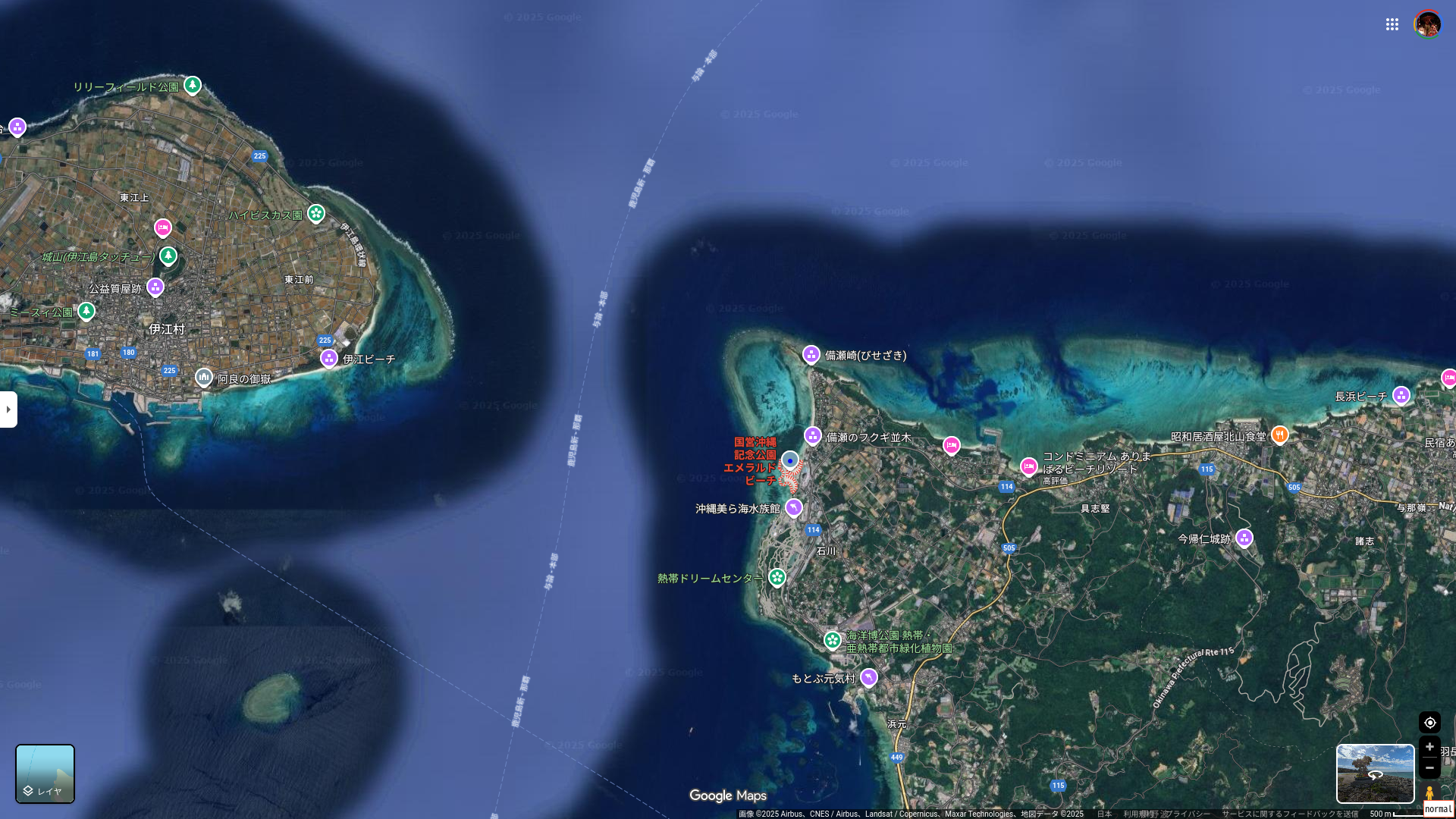
From Google Map. Click or tap to view in a new tab As you can see from the image, the Ie Suido (Ie Strait) lies between Ie Island and Bisezaki, running north to south.
The Ie Strait is known as a marine difficulty due to strong tidal currents. Since marine accidents are frequent around the Ie Strait, the Japan Coast Guard regularly compiles information on the tidal currents.
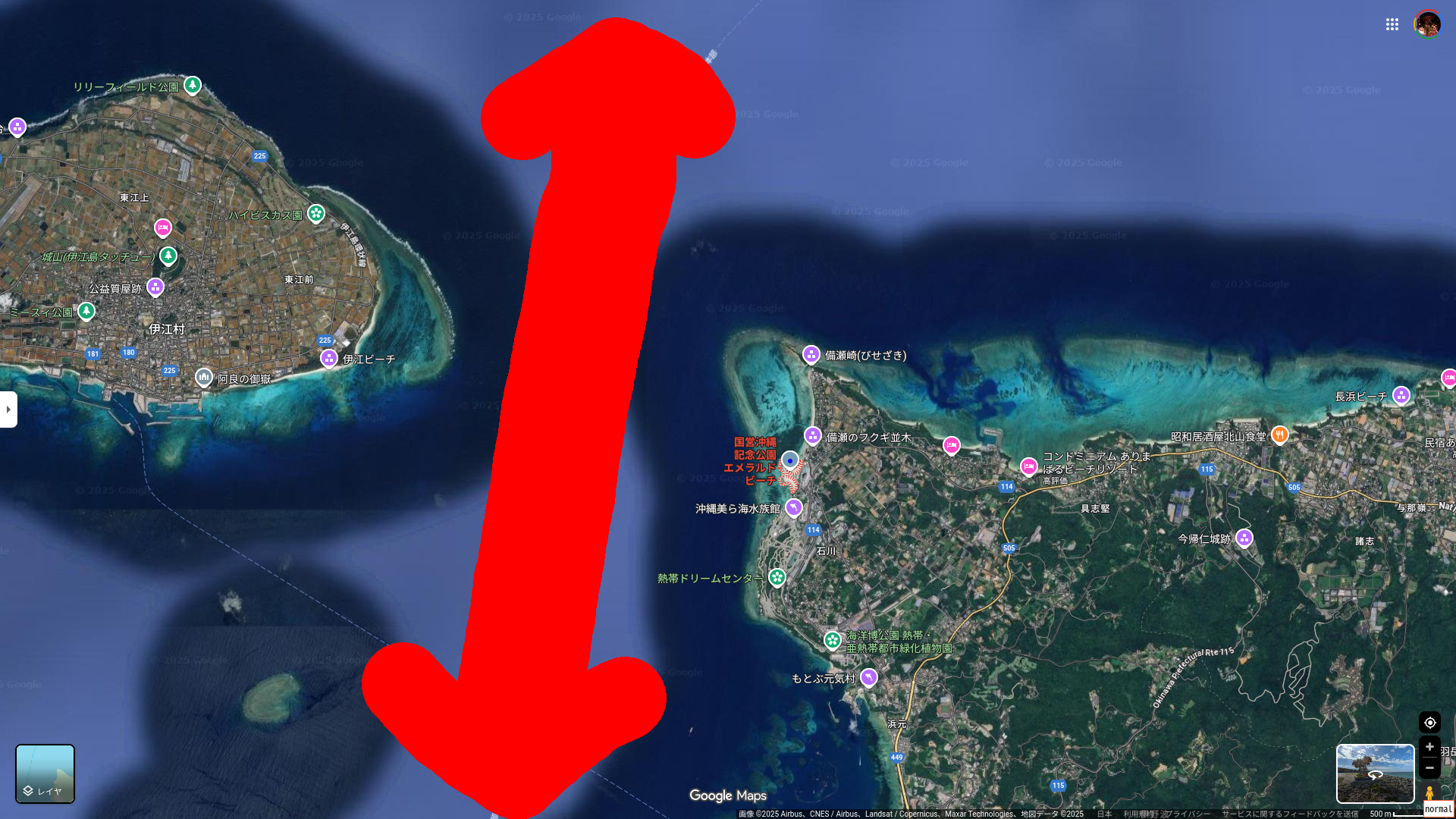
From Google Map. Click or tap to view in a new tab Because the Ie Strait has strong currents, strong currents naturally occur around it.
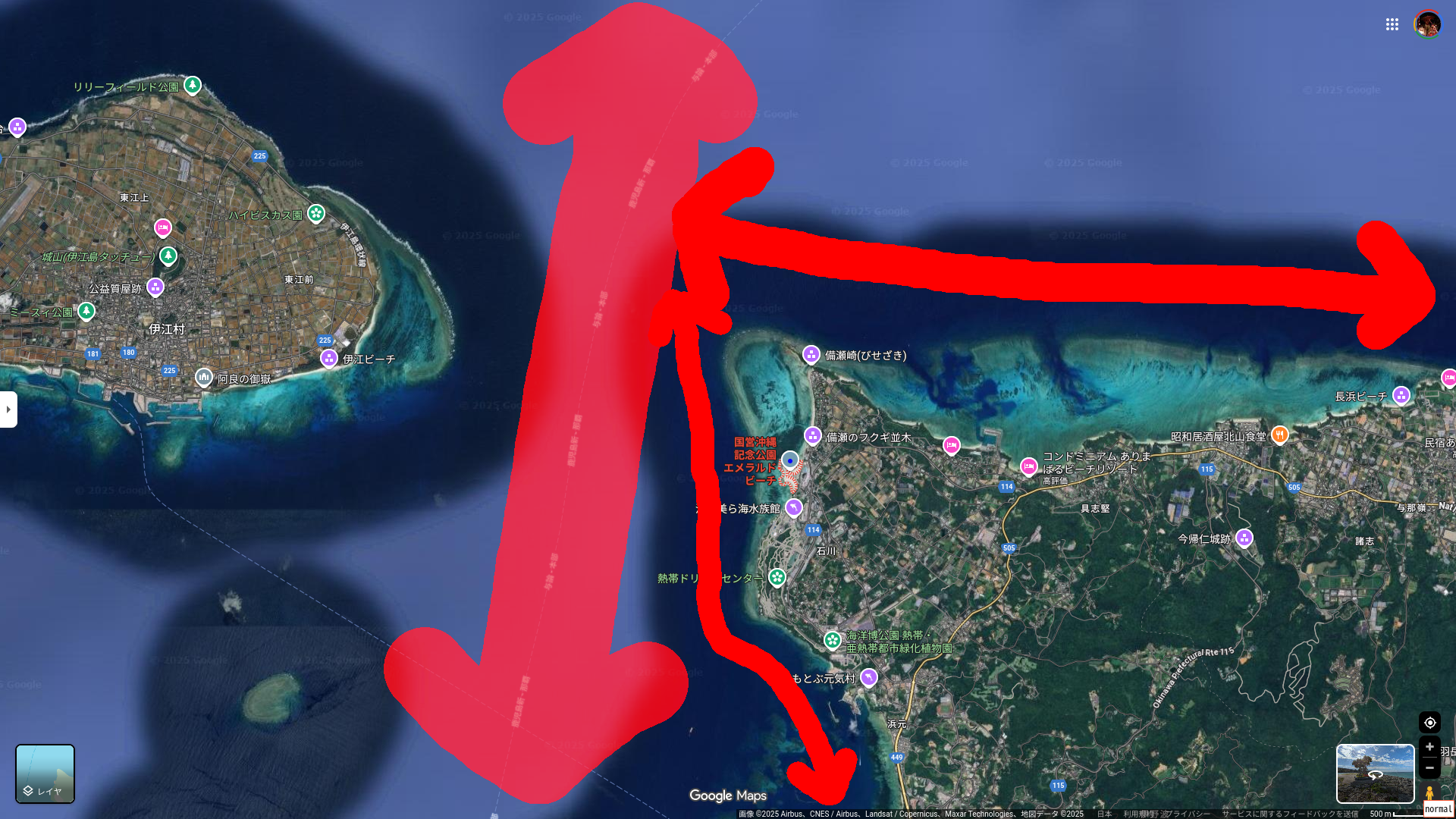
From Google Map. Click or tap to view in a new tab It's important to know if there is truly a current around Bisezaki.
Although it's from a scuba diving blog, it's reported that at the diving point "Dyson," located north of Bisezaki, a constant downcurrent flows, sucking divers down to -40m.
Another blog features a scuba diving log at Bisezaki. The continuous use of words like "drift" and "let's drift" after descending indicates that diving in the Bisezaki area is predicated on the presence of a current.
It's highly unlikely that a tourist snorkeler would be dragged down by a downcurrent, so we can ignore the downcurrent. However, it should be anticipated that the outer reef constantly has a current, and if one is swept beyond the outer reef and further into the Ie Strait, they may never be found unless someone notices they are being swept away.
This means it is absolutely necessary to return to shore before being carried out to the outer reef.
Let's zoom in closer to Bisezaki.
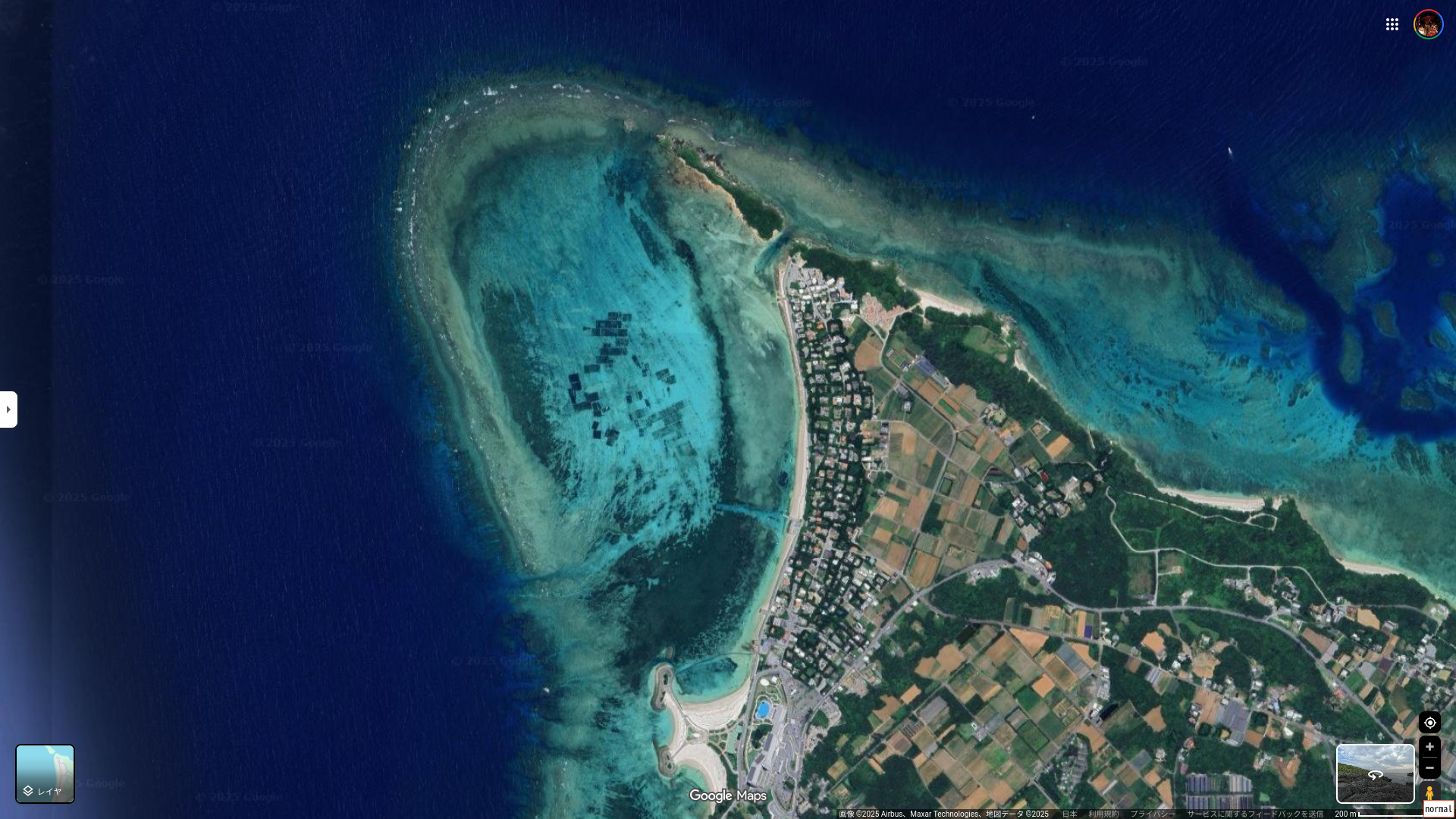
From Google Map. Click or tap to view in a new tab I will mark the places that immediately strike me as needing caution for currents with red circles.
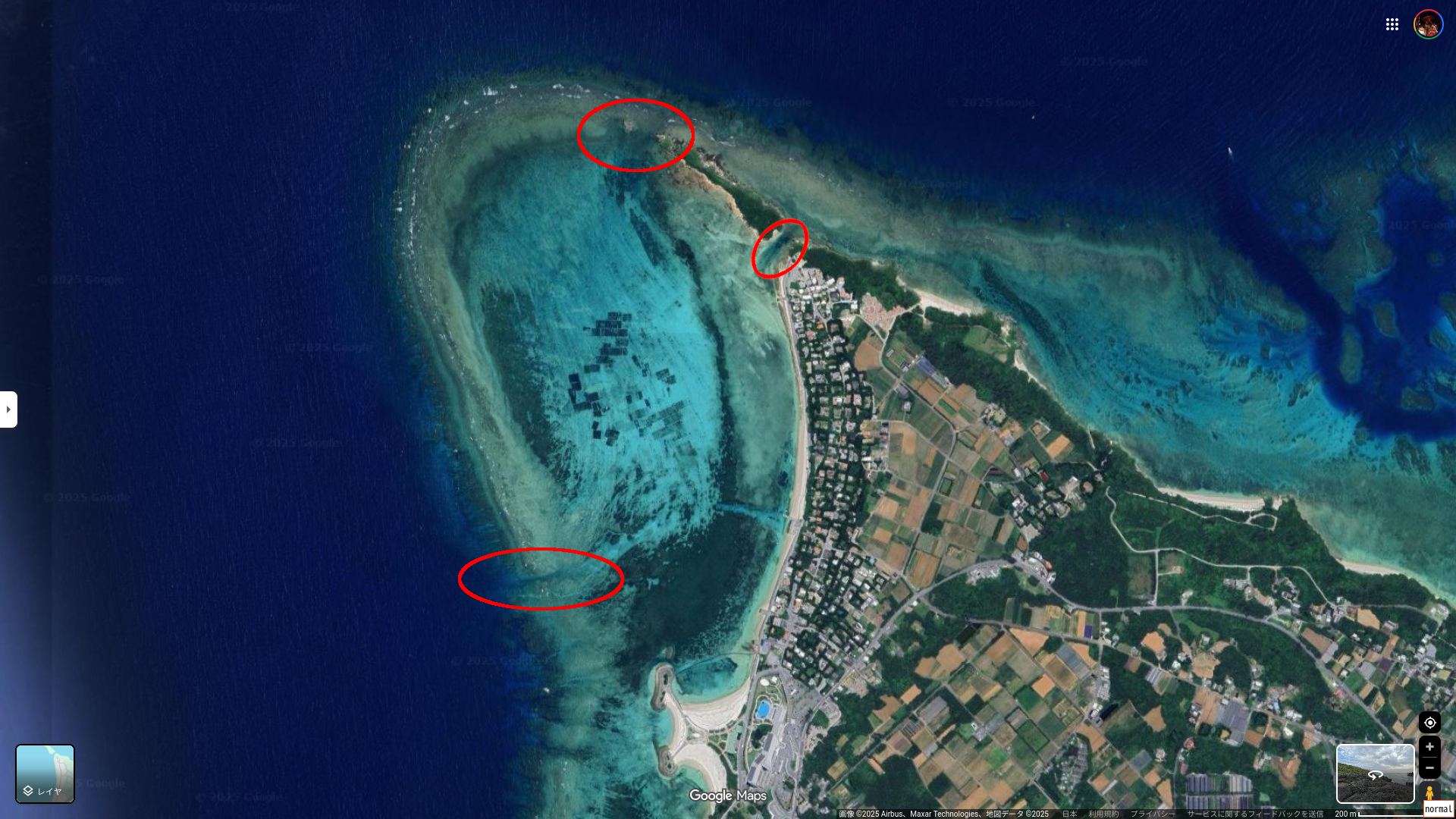
From Google Map. Click or tap to view in a new tab And the image below is a diagram illustrating where the water that entered the reef over the outer reef is likely to exit back out of the reef.
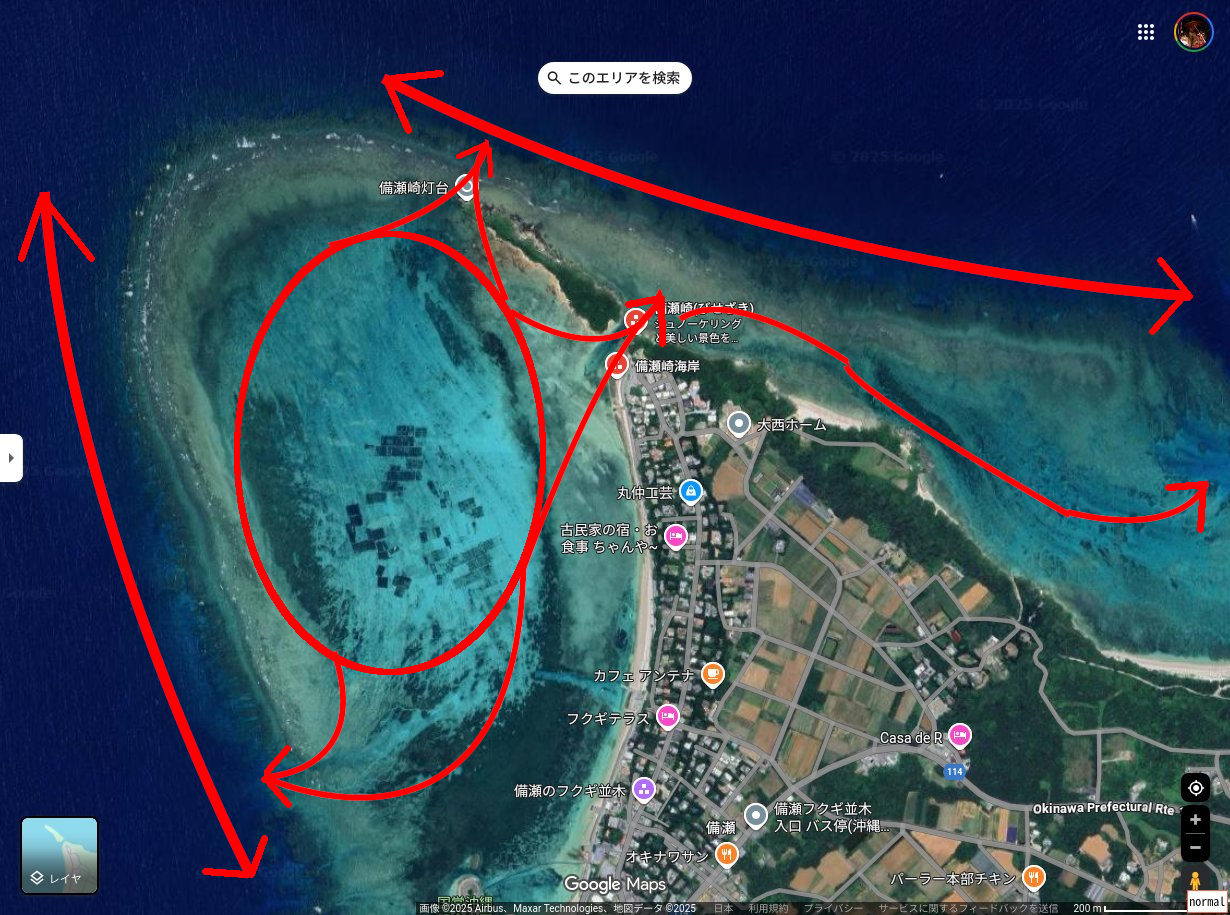
From Google Map. Click or tap to view in a new tab A strong current can be expected in the southernmost channel heading outside the reef, but it is far from the land and is unlikely to be a problem for tourist snorkelers. Of course, channels are also visible within the Bisezaki reef, and streaks indicating the presence of a current can be seen, so currents are likely present, and one cannot be complacent.
The northernmost channel is a bit wider, and we can probably ignore it as few tourist snorkelers would swim that far.
Nevertheless, the tip of the cape is also the area with the fastest current, and if one is swept away here, it is not hard to imagine being quickly caught by the outer reef current and pulled into the Ie Strait current.
For example, imagine a tourist snorkeler at the tip of Osezaki in Shizuoka Prefecture attempting to swim without knowing or ignoring the rules. Doesn't that make you shudder?
Since Bisezaki has no administrator, it is not surprising that such things happen.
Now, the channel that concerns me the most is the easternmost channel, where swimmers tend to congregate. This channel was precisely the scene of the recent accident.
If the tide starts to recede from high tide towards low tide, it is not surprising that the large volume of water within the reef concentrates in this channel near Bisezaki Coast, creating a strong current. Depending on conditions such as tide level, current speed, and wind, it is not surprising for someone to be swept out to the outer reef in the shortest distance.
I found a video on Instagram showing this channel flowing, which I will embed below.
It seems the video was taken around the time the tide began to recede from high tide. The person being swept away appears to be a rescue worker from the Japan Coast Guard. However, despite performing proper fin work, they are completely unable to swim against the current.
This shows that Bisezaki can have a current this strong when it flows.
It's natural for a tourist snorkeler who knows nothing, thinks nothing, is unaware of their own abilities, and doesn't know or try to learn what is dangerous, to be swept away. And this is without any equipment to secure buoyancy. Recklessly rushing into such sea conditions is a suicidal act.
- Is it a place where swimming should be enjoyed in the first place?
-
So, is Bisezaki truly a dangerous body of water for swimmers? Let's consider this.
Searching for Bisezaki online reveals a great many introductions describing it as a coast suitable for snorkeling. Information suggests it is also suitable for families with small children. Are the vast majority of these people reckless individuals who underestimate the sea?
It seems the answer is not simply yes. Many people write that one should aim for low tide when entering Bisezaki. What Bisezaki looks like at low tide can be seen in an image on the page Bisezaki Coast: Popular Snorkeling Spot & Diving Spot on Okinawa Main Island.
The channel that I thought was dangerous has become a tide pool. The image also suggests that the entire outer reef is exposed above the water's surface.
An image attached to another blog post, You can meet many colorful fish at "Bisezaki"♪ A must-check for snorkeling lovers!|OkinawaHolidayHackers, shows a similar view.
The page Can you snorkel at Bisezaki? Introducing low tide conditions, parking, and facility information also shows an image of Bisezaki Coast turned into a tide pool.
In this state, it certainly looks fun to play with children, and being swept away is unlikely to happen. Of course, it is still a waterfront, so general precautions required at the water's edge are necessary. Since it's a rocky area, injury prevention is also needed. But within the reef, it certainly looks like fun without having to worry about the danger of being swept away.
However, the common phrase "low tide is the best time to aim for" is a bit concerning. This understanding should be corrected.
One should understand that it is not that low tide is the best time to aim for, but that it is dangerous if you do not aim for low tide. At all other times, it should be understood that there is a strong current that a person cannot resist, making it dangerous.
- Is it okay to swim at Bisezaki?
-
If you can judge that Bisezaki is safe for your skill level and that of your companions at the time of entry, then I think it's fine to enjoy the sea at Bisezaki. This safety window likely limits entry to the period around low tide, perhaps for a total of two hours (one hour before and one hour after low tide), when the Bisezaki waters turn into a tide pool.
However, even at low tide, if the wind is strong and waves are constantly breaking over the outer reef and entering the inner reef area, a strong current heading towards the back reef might still be present.
In short, when entering the sea at Bisezaki, it is mandatory to look at the sea and judge whether it is safe. If you cannot make that judgment, you should not enter the sea at Bisezaki. You must change your swimming location to a properly managed beach with lifeguards on duty.
The unfortunate accident at Bisezaki this time can be described as an accident due to ignorance, caused by neglecting this essential judgment or by not knowing that such sea condition assessment is mandatory in natural waters, or by not preparing the necessary gear.
Therefore, I am inevitably led to the conclusion—a conclusion based on accumulated speculation—that the couple should not have entered the sea at Bisezaki at that time.
- Finally
-
As you may know, fatal accidents involving tourist snorkelers have been frequent in recent years, far exceeding the number of fatalities in other marine activities like diving. It is no exaggeration to say they account for the majority.
A major underlying reason is that tourist snorkelers enter the sea without learning anything about it: how to deal with the sea, what skills are necessary, and what equipment should be worn. It is almost inevitable that fatal accidents occur.
News reports of fatalities at sea, particularly among middle-aged and older individuals, are relentless in recent years. Recently, there has been an increasing number of reports or suspected cases of Immersion Pulmonary Edema among the causes of death.
Prompted by the suspicion that the unfortunate Bisezaki accident covered in this article might have involved Immersion Pulmonary Edema, I have summarized the pathology and prevention of Immersion Pulmonary Edema as an amateur.
I hope this article can contribute to reducing unfortunate accidents.
Finally, I offer my sincere condolences to the deceased husband who tried his best to save his wife, even beyond his own capabilities (though that act is not something to be praised). That thought that the accident could have been prevented does not disappear, but you did your best to save your wife. I will never forget that.
- Appendix A: Skin Diving Items in the Open Water Course Standards
-
The OW course includes the following skin diving items that must be achieved. Please use them to help snorkelers and skin divers enjoy the sea safely.
- The importance and implementation of the buddy system
- The danger and prohibition of forced breath-holding
- The mechanism, danger, and prevention of shallow water blackout
- The danger and prohibition of hyperventilation
- The danger and prohibition of breath-holding techniques used in free diving competitions, such as "packing," in an open water environment
- Buddy system
- How to don and doff a wetsuit
- How to don and doff a weight belt and precautions
- How to don and doff a mask and precautions
- How to wear a snorkel and precautions
- How to don and doff fins and precautions
- How to walk on land while wearing fins
- Entry methods, exit methods, and precautions
- How to float
- How to stand up in water where the bottom is reachable
- Snorkel clear
- Snorkel recovery
- Mask clear
- Surface dive
- Ear equalization (clearing)
- Mask blow
- Correct fin work
- Donning and doffing mask, snorkel, and fins on the surface
- Donning and doffing weights on the surface
- Ensuring buoyancy by ditching weights
- Retrieving weights underwater
- How to deal with leg cramps
- Pulling up a drowned skin diver
- Towing an unconscious skin diver
- Pulling an unconscious skin diver onto land or a boat
- Confirmation of procedures for calling an ambulance
- CPR, including the use of an AED
- Gathering information about the marine area for skin diving
- Judging sea conditions for safe skin diving
- Confirmation of the presence of currents like rip currents and how to deal with them
- Changes in sea conditions due to the ebb and flow of the tide
- Confirmation of strong coastal currents
- Setting and retrieving buoys
- Safe entry and exit methods
- Appendix B: Medical Check
-
- DAN JAPAN Diver Medical | Participant Checklist (pdf)
- Mikomoto Island Kaiyusha (Although still rare, this type of acceptance condition is becoming a trend)
- Appendix C: References
-
- MSD Manual Consumer Version Immersion Pulmonary Edema
- MSD Manual Professional Version Immersion Pulmonary Edema
- Considering Immersion Pulmonary Edema (DAN JAPAN - pdf)
- Have you ever felt shortness of breath while diving? Considering Immersion Pulmonary Edema (Ocean+α - DAN JAPAN pdf re-composed in html)
- Lungs become "waterlogged" without drowning in the pool or sea | About swimming-induced pulmonary edema (yahoo news)
- Case/Example Report: A case of Immersion Pulmonary Edema developed during snorkeling (j-stage)
- Case: A case of swimming-induced pulmonary edema developed in an elderly woman with heart disease (j-stage)
- Case Report: A case of Immersion Pulmonary Edema causing acute respiratory failure during scuba diving (j-stage)
- A Case of Immersion Pulmonary Edema Associated with Cardiac Sympathetic Hyperactivity (Journal of Japanese Association for Acute Medicine)
- Case: A case of exercise-induced alveolar hemorrhage developed during a triathlon competition (j-stage)
- A Case of Immersion Pulmonary Edema Associated with Cardiac Sympathetic Hyperactivity (Journal of Japanese Association for Acute Medicine)
- A case of negative pressure pulmonary edema with delayed symptom exacerbation (Journal of Japanese Association for Acute Medicine)
- Case: A case of exercise-induced alveolar hemorrhage developed after a marathon (j-stage)
- immersion pulmonary edema (chest journal)
- immersion pulmonary edema in female triathletes (pulmonary medicine)
- risk factors for immersion pulmonary edema in recreational scuba divers: a case-control study (uhm 2019, vol.46 no.5 – risk factors for ipe - pdf)
- observational study of potential risk factors of immersion pulmonary edema in healthy divers: exercise intensity is the main contributor (sports medicine 03 october 2017 volume 3, article number 35, 2017)
- immersion pulmonary edema: drowning from the inside (uhm 2019, v ol. 46 n o. 5 – commentary: immersion pulmonary edema : pdf)
- immersion pulmonary oedema: a cardiological perspective (diving hyperb med. 2019 mar 31;49(1):30–40.)
- risk factors for immersion pulmonary edema: hyperoxia does not attenuate pulmonary hypertension associated with cold water-immersed prone exercise at 4.7 ata (journal of applied physiology, volume 110. issue 3, march 2011, pages 610-618)
- Husband who rescued his wife swept away while snorkeling loses consciousness and dies; Immediately after sitting down to rest in Bisezaki, Motobu Town, Okinawa (Okinawa Times: The accident covered in this article)
- Bisezaki: Okinawa Diving Map
- Bisezaki Scuba Diving Log 427
- Current Status Survey Report in the Emerald Beach Area (PDF: 11th Regional Coast Guard Headquarters)
- Japan Transport Safety Board Marine Accident Investigation Report: Yacht ORCHID Grounding (PDF)
- 【11th Regional Coast Guard Headquarters】The hidden danger in the beautiful sea: "Reef Current" (YouTube)
- "Swept away in an instant" Experience the fear of "Reef Current" that occurs along the coast (YouTube: Okinawa Times)
- #4 Deep dive into the truth!! The invisible danger hidden in the sea: "Reef Current" (YouTube: OKINAWA NEWS)
- 【Danger】Experience the terror of Rip Current (Reef Current)! Let's learn important points to prevent water accidents【Must-See】 (YouTube: Miss Okinawa's Okinawa Tourism TV)
- Bisezaki Coast: Popular Snorkeling Spot & Diving Spot on Okinawa Main Island
- You can meet many colorful fish at "Bisezaki"♪ A must-check for snorkeling lovers! (OkinawaHolidayHackers)
- Can you snorkel at Bisezaki? Introducing low tide conditions, parking, and facility information
- category :
- #diary
- #blog
- #accident
- #snorkeling
- #tourist
- #nondiver